Understanding Mental Illness and Dementia
As a clinical psychiatrist who practiced in New York City for nearly three decades and who works in a state psychiatric hospital, I have—for all these years—attempted to understand the inner world of those with mental illness, including schizophrenia. That inner world can resemble the Wild Waters of the Elmer Keene painting that hung in my waiting room.
We cannot presume to fully understand another’s experience. We can only try to find some understanding and empathy.
To better understand these inner worlds, I read firsthand accounts written by patients and family members. Early in my career, I published reviews and a guide to these books (A professional's guide to books for families of the mentally ill - PubMed). The goal was to improve the understanding of family members living with mental illness—by encouraging mental health professionals to read and recommend books on the topic. We ran psychoeducational groups to teach family caregivers about the causes and treatments of mental illness and how best to help their relatives (FAMILIES OF MENTALLY ILL: GETTING INVOLVED - The New York Times).
In the decades since, I’ve expanded this work to medical students, co-writing an Innovative Medical Education article with a student: The Use of Personal Accounts in the Study of Severe Mental Illness (EJBM 29.1 Woesner.pdf). As an academic psychiatrist and training director, I’ve run medical student training programs to reduce stigmatization and increase empathy toward people with mental illness ( A Preclinical Medical Student Program: Student Reactions to Interviewing Psychiatric Inpatients)
Early in this journey to understand mental illness, my role as physician took a sharp turn. Like the families I was treating, I became a caregiver. Over decades, first my father and then my husband developed Alzheimer’s disease, which—in the later stages—has symptoms like those of schizophrenia. Delusions, hallucinations, agitation, and cognitive problems. Because I cared for my husband at home, I had a window into the inner world of dementia while I struggled to relieve his anxiety and despair and instill joy. Our relationship deepened. I read every firsthand account—books and articles— that I could find and began writing my own book in the hope of helping others.
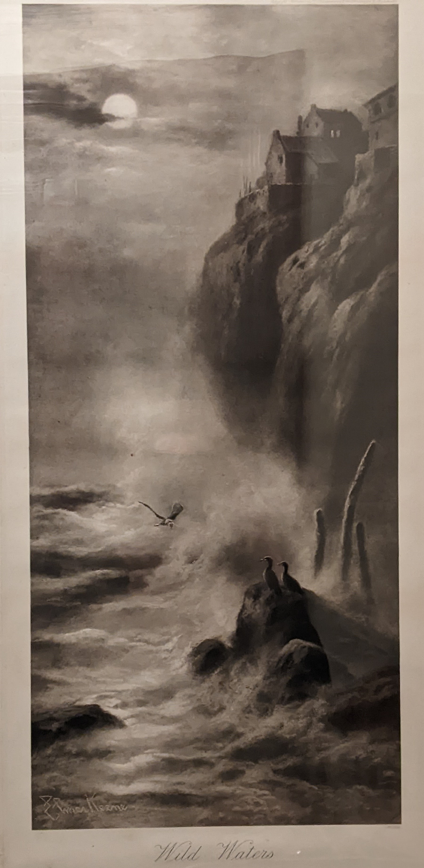
Wild Waters
Elmer Keene (1853–1929)

THE TREATMENT AROUND THE CORNER
“A psychiatrist attempts to stay positive while facing her parents' and loved ones' premature deaths-ever reminding us that hope springs eternal.”
Early in my practice, I treated young adults with fatal diseases: HIV/AIDS and incurable cancer. “I struggled with my dying patients to maintain hope. My statement of hope became: Let’s use all the treatments and resources we have to prolong your life. There could be a treatment around the corner.” AIDS treatments eventually arrived. During that time, my father was diagnosed with Alzheimer’s disease, and I cared for him for thirteen years. It was difficult to maintain hope because, after four decades of Alzheimer’s research, there were no effective treatments. Then my husband developed dementia, and I learned something. I learned that, ultimately, there are few differences between the experiences of doctors and patients. “For all of us, there remains the one important struggle: to maintain hope.”

Psychiatric Times, October 31, 2019