Dementia Books
Choosing books on dementia is like throwing a pebble into water and watching it ripple. The first or inner ring has the closest relation to the pebble. The other rings grow more distant, as the water expands.
To understand dementia you can read the books written by those who have dementia—the first ring. They tell you what they are thinking and experiencing. How they live with dementia and what their present and their future holds. Many of these books describe the earlier phases. They are courageous renderings.
The next ring would be the books by the people who live 24/7 or day-to-day with someone with dementia, the caregivers who love and succor and grieve—often in the later stages. They know a lot about dementia. Then come the books by caregivers who do not live day-to-day but are just as important to a person with dementia. They, too, experience the pain and loss. The next ring contains the dementia guides, written by authors who treat people with dementia and their caregivers. The final ring includes novels that purport to paint a picture of someone with dementia. The novelist goes inside the head of the person with Alzheimer’s and expresses their thoughts. It is far from the first ring, unless the novelist has dementia or is a day-to-day caregiver.
There is an article aptly titled, What Do Dementia Patients Really Think About? Can we presume to know unless they tell us?
This is not a comprehensive list but includes books I’ve encountered as a caregiver. The most recently published are listed first. Feel free to email the names of others
Firsthand accounts by people with dementia:
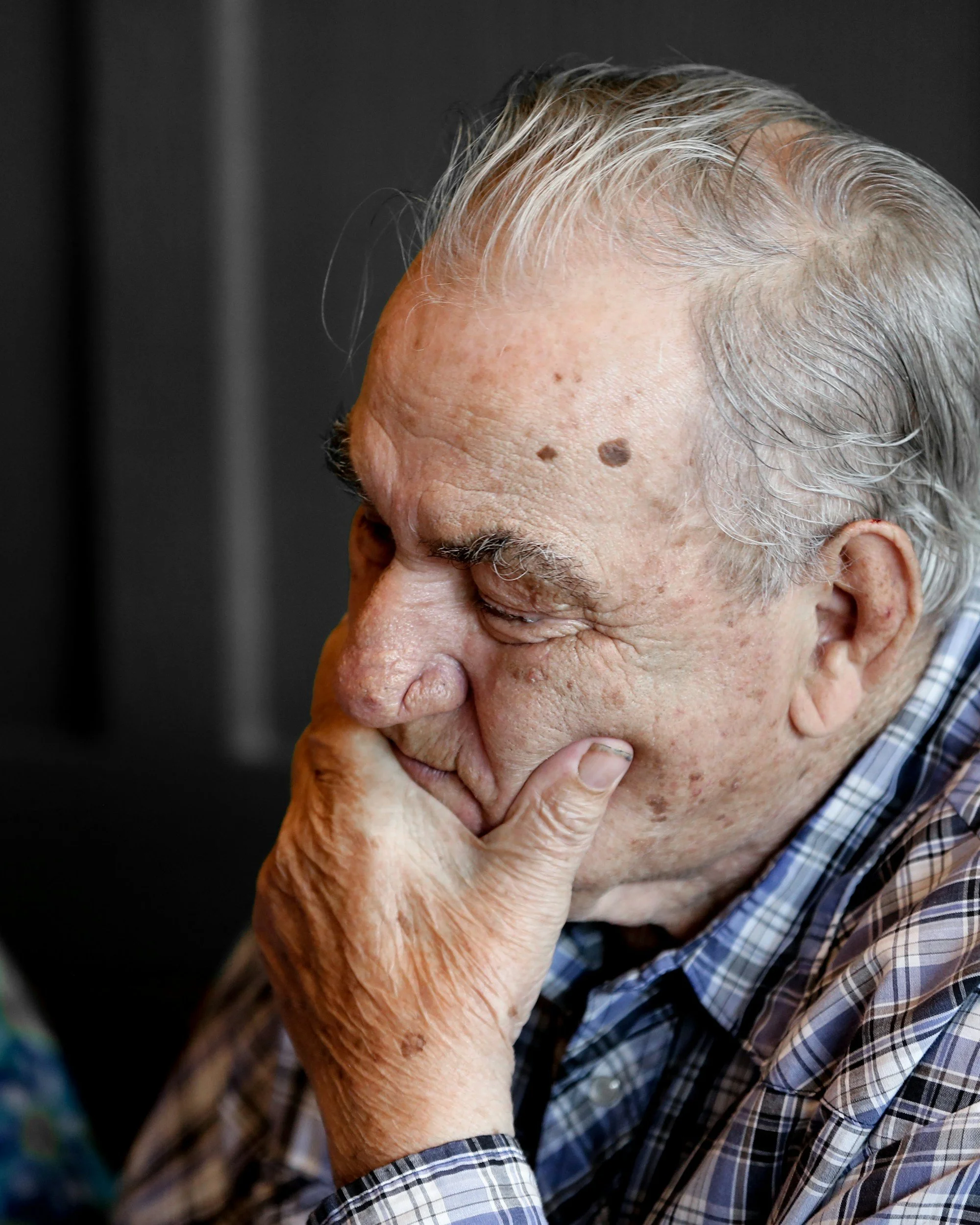
In their accounts, many of those with Alzheimer’s are told by their physicians, “There is nothing we can do.” Since the writing of some of these books, there is more hope—with early testing and new anti-amyloid medications.
Title: Gibbs, D., & Barker, T. H. (2023). A Tattoo on My Brain: A Neurologist's Personal Battle Against Alzheimer's Disease. Cambridge University Press.
Review: The author of this book is a neurologist with Alzheimer’s disease. With lifelong experience and deep knowledge of dementia, he takes the reader through the steps of discovery, diagnosis, and treatment. He encourages early diagnosis and treatment and recounts his experience with what was—at that time—an experimental treatment. These anti-amyloid treatments are no longer purely experimental and are available to people with early disease.
Title: Saunders, G. (2017). Memory's Last Breath: Field Notes on My Dementia. United States: Hachette Books.
Review: The author is a writer and university professor. The book recounts her early mental decline and the change of identity when she is given a diagnosis of vascular dementia: “I am dementia,” she says. The book integrates literature and science and appears to be an effort to “flesh out” her shrinking self. Because her memories of childhood are more vivid than current memories, she fills pages with them. It’s a way to connect with an earlier self. Excerpts from her diary—called dementia field notes—give insight into her dementia changes. In a final poignant chapter, she struggles with the concept of “crossing-over” and knowing her mind will die before her natural death. She discusses assisted suicide and VSED (voluntarily stopping eating and drinking). For a condensed version of the book, see her essay in Slate:Dementia and aging: Diary of a sufferer of microvascular disease.
Title: O'Brien, G. (2014). On Pluto: Inside the Mind of Alzheimer's. Codfish Press.
Review: A journalist chronicles the progression of his early-onset Alzheimer’s. His grandfather and mother had the disease. He is a baby boomer, and the book captures the boomer perspective through his personal history and cultural allusions. The darkness of the disease is a place he calls Pluto. Throughout the book, the author battles the symptoms of what he calls a “cunning killer:” word confusion, dislocation, loss of short-term memory and the inability to recognize once-familiar faces. He hallucinates and loses his sense of self and self-esteem. The language and emotions are powerful. The book is touching and beautifully written right up to the ending, when he contemplates Pluto and the likelihood of death.
The author has a realization that Alzheimer’s is not about the past but about the present struggle to live with the disease. He believes that many people with Alzheimer’s are voiceless and that others should go to Pluto with them—to better understand their journey. He’s made it his mission to increase public awareness. See his film: On Pluto - Living with Alzheimer's Film Project
Title: Taylor, R. (2007). Alzheimer’s from the inside out. Health Professions Press.
Review: The author is a clinical psychologist and Alzheimer’s advocate who describes the inner experience of early-onset, early-stage Alzheimer’s disease. The book is a series of essays divided into sections: What Is it Like to Have Alzheimer’s Disease? From the Inside Out. From the Outside In. Dear Doctor.
In the first section, he writes “…we are reduced to being observers of the demise of our own minds.” His life is “an ongoing struggle to stay on track, to complete the thought, to find the right words,” and to hold himself together in front of others. He has an existential fear—“the end of me as I know myself.” He withdraws from the world. In the second section, he (like Gerda Saunders) says, “I am Alzheimer’s and Alzheimer’s is me.” He is of two minds. His diseased mind is living inside his other mind. He will eventually transition to one fully diseased mind. Despite his fears, he retains his sense of humor. The third section has observations about caregivers, and the final section gives advice to doctors treating Alzheimer’s.
These essays are riveting. Unless you are a person with Alzheimer’s, this is the closest you will get to walking in their shoes. For two decades, these essays have appeared in the dementia-care literature and are still used for advocacy and education. See: Thoughts on dementia by the late Dr Richard Taylor | Dementia Alliance International.
Accounts by people with dementia and their caregivers:
Title: Smith, B., Gasby, D., & Shnayerson, M. (2016). Before I forget: Love, hope, help, and acceptance in our fight against Alzheimer's. Harmony Books)
Review: This memoir is written by the person with Alzheimer’s and her caregiver husband, with the help of a Vanity Fair editor. B. Smith is a well-known African American model, restauranteur, and entrepreneur who develops early-onset Alzheimer’s. The book describes living with Alzheimer’s from two perspectives. It is open about caregiver stress and moments of desperation. To further understand the caregiver experience, read Dan Gasby’s article in the journal Neurology: Alzheimer dementia's other victim: The spouse | Neurology. African Americans are twice as likely to have Alzheimer’s or the related dementias. There are few books about their experience. See Black Family Caregiver continues to share her story to help other caregivers open up - Alzheimers and Dementia Blog - Alzheimers Association of Northern California and Northern Nevada for a spouse-caregiver’s experience and Navigating dementia: Kelly P. Hodges' caregiving journey - DefenderNetwork.com for a daughter’s experience.
Memoirs by Dementia caregivers: Adult Children

Title: Sanddeep, J. (2023) My Father’s Brain: Life in the Shadow of Alzheimer’s. Farrar, Straus and Giroux.
Review: This is a memoir about the author’s immigrant father with Alzheimer’s disease. The author—a cardiologist—set out to learn how dementia changes the brain. He shares his discoveries in this informative book. He describes the experience of parental-caregiving and how the three siblings “felt, quarreled, and found their way through.” They do not live with their father, as is sometimes the case with adult children of parents with dementia. Their father resides in his own home, with a live-in aide.
Memoirs by Dementia caregivers: Spouses

Title: Hershberger, R. (2022) Diary of an Alzheimer’s Caregiver. Purdue University Press.
Review: This is one of the few books written by someone who lives day-to-day with a spouse with Alzheimer’s, into the final stages. It is a raw portrayal of the intense symptoms and difficulties of caring for his wife, including her psychosis and violent behavior. There is little medical information and little discussion of coping, but it is a rare and intimate view. The Appendix describes her prior life.
Title: Smith, B., Gasby, D., & Shnayerson, M. (2016). Before I forget: Love, hope, help, and acceptance in our fight against Alzheimer's. Harmony Books.
See the description under ACCOUNTS BY PEOPLE WITH DEMENTIA AND THEIR CAREGIVERS.
Title: Bayley, J. (1999) Elegy for Iris. St. Martin’s Press.
Review: John Bayley wrote two memoirs about his wife, Iris Murdoch. She was a commanding literary presence in Britain during the last half of the 20th century. In 1995 at age 76, she is diagnosed with Alzheimer’s dementia and lives with the disease until her death in 1999. Elegy for Iris recounts their early relationship and the Alzheimer years when they live together; she later enters a nursing home. The book describes the Alzheimer’s changes—the loss of communication and self-care, the childlike transformation—and the caregiver’s struggles. This is a literary book and an emotional one. It was well received in Britain although, for a while, her dementia overshadowed her amazing and creative life. A movie based on Elegy for Iris was released in 2001—titled Iris.
Title: Petersen, B. (2010). Jan's story: Love lost to the long goodbye of Alzheimer's. Behler Publications.
Review: Jan’s Story is the story of a woman’s early-onset Alzheimer’s and its effects on her husband—the emotional overload, physical exhaustion and depression. As journalists, they live on assignment in foreign countries. In 2005, in Tokyo, she is diagnosed with Alzheimer’s. The book describes her disorientation, memory loss, and anger, and what he calls his three stages of Early Onset caregiving. He cares for her alone, with a live-in aide, and then moves her to assisted living. “The first (stage) almost cost me my job, the second almost cost me my health, and the third all but ended my sanity.” He is chastised for moving her to a care facility and, later, for finding a new love while Jan—who does not recognize him—lives nearby. Like other caregivers (Dan Gasby, Before I Forget) he believes that, if other people have not experienced it, they have no right to judge. To read more, see HealthNewsDigest.com
Title: Heming Willis, E. (2025). The Unexpected Journey: Finding Strength, Hope, and Yourself on the Caregiving Path. Random House.
This is more of a guide than an experiential firsthand account. The author is the wife of Bruce Willis, the well-known actor, who was diagnosed with frontotemporal dementia in 2023. She calls her book a guide to caring for the caregiver. She consults multiple experts who help her on her caregiving journey and who contribute to the book. Each chapter—except the first biographical chapter—is on a different caregiving topic. There is little about what her husband is experiencing. Also, although she recognizes the privilege of her position, many readers will not be able to hire the experts and resources she has. While the chapters are helpful to caregivers, it is important to note that she is not a day-to-day caregiver. She has two young children and chose to put her husband into a separate house where he is cared for by his 24-hour care team (as per Diane Sawyer 8/26/25 ABC interview).
Title: Mace, N. L., & Rabins, P. V. (2021). The 36-hour day: A family guide to caring for people who have Alzheimer disease and other dementias (7th ed.). Johns Hopkins University Press.
This book remains the most thorough and practical guide for dementia-caregivers. It is in its 7th printing. (I reviewed the first edition for the journal, Psychiatric Services.) The authors are experts in the dementia field. Because the book is indexed, a caregiver can find help for almost any problem, from agitation to word-finding problems. There are chapters on how caregivers are affected and how to cope.
Guides
Title: Genova, L. (2009). Still Alice: A Novel. Pocket Books.
The book is about a fictitious woman, a linguistics professor at Harvard, who receives a diagnosis of early-onset Alzheimer’s disease (EOAD). It is written by a neuropsychologist at Harvard. When published, the book appealed to readers and opened the door to the discussion of dementia in homes and book clubs around the country—a welcome opening for a disease with such a stigma. It portrays the role of genetics in EOAD and Alice’s devastating loss of identity. The movie of the same name came out in 2014.
It does not portray the arc and order of Alzheimer’s symptoms. Despite her inability to dress herself (dressing apraxia), difficulty recognizing her daughter (prosopagnosia), and the presence of hallucinations—all symptoms of later stage Alzheimer’s—Alice gives a well-organized speech about being in the early stages of Alzheimer’s. The challenges faced by family are underplayed. For example, in Alzheimer’s there is great risk in getting lost. Alice loses her way many times and, eventually, wanders into a neighbor’s kitchen, confusing it for her own. Wanderers need to be watched, not left alone.
Title: Sciucco, M. (2013). Blue hydrangeas. Create Space (Amazon imprint).
The author based her characters on the couples she met at her job as a hospital case manager. Jack’s wife of 45 years, Sara, receives a diagnosis of Alzheimer’s disease, and he promises he will never leave her. They are running a Cape Cod bed and breakfast called Blue Hydrangeas. Over time, she loses her abilities and needs a companion to prevent wandering. Nine years later, after a fall, the hospital staff recommends assisted living memory care. He resists. On the way to the intake interview, he takes a detour to Provincetown, a trip that includes past memories and a new crisis.
Because the author gives the husband’s point of view, she does not attempt to express all of Sara’s thoughts and feelings. Sara often “wore a mask,” and her husband “had no idea what went on behind that mask.” The book does not portray the most severe symptoms, except for a delusion and wandering at the end. When Sara is hospitalized, there is a “tremendous [positive] impact on her mental and physical well-being.” This is not typical. People with dementia become disoriented in the strange, new hospital environment and their dementia worsens. Sara’s reaction to giving up driving is also uncharacteristically mild. After discussion, she simply “handed over the [car] keys.” Overall, this book is helpful for elucidating the painful disruption of the spousal bond.
Novels
Title: Powell, T. (2019). Dementia Reimagined: Building a Life of Joy and Dignity from Beginning to End. Avery.
Review: Dr. Tia Powell is a physician and bioethicist. The first half of the book is about the history of dementia and dementia research. She then discusses the caregiver experiences of people with whom she has worked. The final chapters are her thoughts on her own possible dementia—her mother and grandmother had dementia—and how to plan ahead. How to find joy and dignity until the end.
Title: Shenk, D. (2001). The forgetting: Alzheimer’s—Portrait of an epidemic. Doubleday.
Review: This is an interesting book. The author, a writer, takes the reader through the early, middle, and end stages of Alzheimer’s, filling in history, research, and neurological mechanisms along the way. We learn the human stories of those who have lived with and adapted to the changes wrought by dementia. These people include Ralph Waldo Emerson and Willem de Kooning. The book raises the question: as society moves toward an epidemic of dementia, how do we adjust? Because the book was written more than twenty years ago, it does not have the benefit of current research into biomarkers and anti-amyloid treatments. David Shenk is the creator and producer of the Living with Alzheimer’s Film Project: About the Project - Living with Alzheimer's Film Project.